How to Tell If That Hailstorm Actually Damaged Your Roof
Not every hailstorm leaves damage you can see from the driveway, and that's exactly the problem.
September 7, 2026 · 3 min read
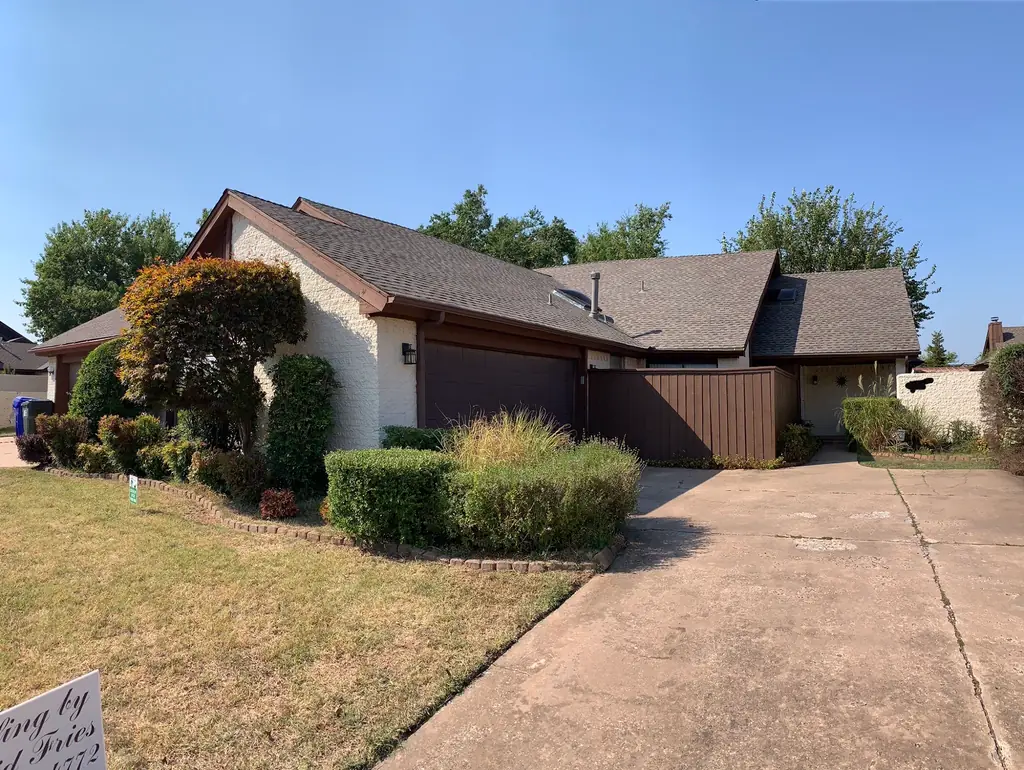
A hailstorm rolls through Norman, the sky clears an hour later, and the roof looks fine. That's the moment most homeowners either relax too fast or start climbing a ladder they shouldn't be on. Hail damage to asphalt shingles is often invisible from a quick glance, and the marks that do show up don't always mean what people think they mean.
Bruising isn't the same as a hole
When a hailstone hits a shingle, it doesn't usually punch through. What it does is compress the asphalt mat underneath the granules, cracking the mat's structure without breaking the surface open. That's a bruise. From the ground it can look like nothing at all, just a faint dark spot or a slight dimple you'd never notice unless you were looking for it. The problem is that a bruised shingle has lost some of its ability to shed water and resist wind, even though it still looks mostly intact. Given enough time, sun, and another storm or two, a bruise is where a leak starts.
Granule loss is the other half of the story
Every asphalt shingle is coated in a layer of ceramic granules that protect the asphalt underneath from UV light. Hail knocks those granules loose on impact. A little granule loss from age and weather is normal and shows up as small amounts of grit in your gutters over the years. A sudden, heavy load of granules in the gutters and downspouts right after a storm is a different thing entirely, and it usually means the hail was hard enough and big enough to strip protective coating off in patches, not just knock off a few loose pieces.
What you can safely check from the ground
- Look in your gutters and at the base of your downspouts for a heavier than normal amount of dark granules
- Check anything flat and metal, like roof vents, AC unit fins, or window screens, for small round dents. Metal shows hail impact clearly and it's a good stand in for what happened to the shingles above it
- Walk the yard and flower beds near the house for broken pieces of shingle or granules washed off the roof edge
- Look at the roofline from the street or a neighbor's upstairs window for dark, felt colored patches where granules are clearly missing
- Check inside the attic, if you can get to it safely, for any new water stains, damp insulation, or daylight coming through the decking
Why you shouldn't be the one to climb up and check
It's tempting to grab a ladder and go look yourself, especially if the storm was a big one and you're worried. Don't. Shingles that have just taken a hail hit are more fragile than they look, and walking on them, especially if they're still damp, can turn a bruise into a crack just from foot pressure. Ladders on wet grass after a storm are their own hazard too. The ground level checks above will tell you whether something might be wrong. They won't tell you for certain, and they're not meant to.
Getting a real answer
A proper roof inspection covers what you can't see from the ground: moisture that's already worked its way into the deck, granule loss patterns across the whole roof rather than one visible slope, and the condition of flashing and sealant around vents and chimneys, which is often where hail related leaks actually show up weeks later. David Fries Roofing has been looking at Norman roofs since 1969, and the short version of what decades of Oklahoma hailstorms have taught this family business is that the roofs that get inspected soon after a storm cost less to fix than the ones that wait until there's a stain on the ceiling. If your gutters are full of granules or your neighbor's roof just got a tarp, it's worth a phone call before the next storm finds the same weak spot.
Central Oklahoma gets more hail than most of the country sees in a decade, and every roof in Norman has been through this before. The point isn't to panic after every storm. It's to know the difference between a roof that shrugged it off and one that's quietly holding damage nobody's looked at yet.
David Fries Roofing LLC — (405) 360-4772
Call (405) 360-4772More articles
What Actually Happens During a Roof Inspection
Most homeowners have never watched a full roof inspection happen, so here's exactly what one covers.
Repair or Replace? The Six Signs That Actually Decide It
The signs that actually point toward a new roof, not just another patch.