What Actually Happens During a Roof Inspection
Most homeowners have never watched a full roof inspection happen, so here's exactly what one covers.
September 7, 2026 · 4 min read
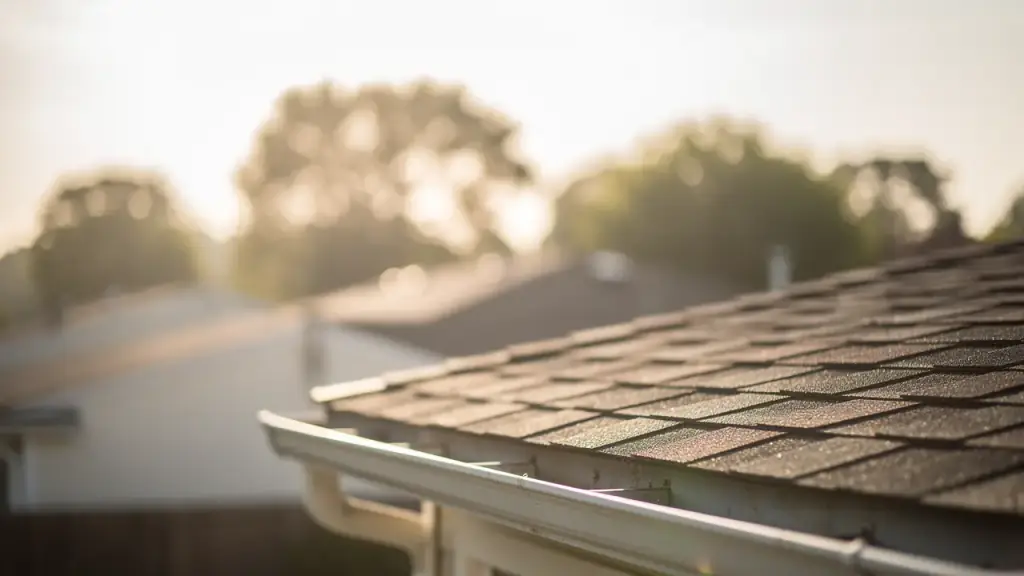
Ask five different homeowners what a roof inspection means and you'll get five different answers, most of them involving someone standing in the driveway looking up for thirty seconds. A real inspection is a lot more methodical than that, and it has to be, because most roof problems don't announce themselves from the ground.
It starts with a full visual pass, not a glance
The first step is walking the entire roof, every slope, not just the ones visible from the street. That means checking every shingle course for cracking, curling, or missing pieces, looking at ridge caps and hip lines where wind stress concentrates first, and checking every penetration point, vents, the chimney, any skylights, since that's where a roof is most likely to be built up from separate pieces that can work loose from each other over time. A visual pass on its own catches the obvious stuff. It's the starting point, not the whole inspection.
Moisture detection finds what the eye can't
Water doesn't always show up where it gets in. It can travel along a rafter or a piece of decking for several feet before it finally drips somewhere visible, which is why a moisture check matters as much as the visual one. This means checking the decking itself for soft spots, discoloration, or a slightly different sound underfoot, and paying close attention to any area below a valley, a chimney, or a roof to wall joint, since those are the spots where water most often finds a way in before it ever reaches a ceiling.
Structural integrity: is the roof still doing its job underneath
Shingles are the part everyone thinks about, but they're sitting on top of a structure that has to hold its shape under snow load, wind, and its own weight for decades. A structural check looks at sagging, especially along the ridge or between rafters, and checks whether the decking still feels solid when walked on rather than spongy or flexible. A drooping section of roof is one of the clearer signs that something underneath the shingles has already started to fail.
Into the attic
Half of what's wrong with a roof shows up first in the attic, not on top of the house. An attic exam checks for daylight coming through anywhere it shouldn't, damp or discolored insulation, staining on the underside of the decking, and rust at any nail points, all of which point to a leak that hasn't reached the living space yet but is on its way. It's also where ventilation problems show up first, since poor airflow traps heat and moisture that age a roof from underneath faster than weather ever does from on top.
Gutters, downspouts, flashing, and sealant
The last stretch of an inspection covers the parts that keep water moving off the roof instead of pooling on it or running down a wall. That means gutters and downspouts, checked for granule buildup, clogging, and proper pitch, plus every strip of flashing and every bead of sealant around chimneys, vent pipes, and roof to wall transitions. Flashing and sealant fail quietly. They don't curl or crack the way a shingle does, they just slowly stop doing their job, and by the time water shows up inside the house the flashing has usually been letting it through for a while.
In Central Oklahoma, all of this matters more than it might in a milder climate. Summers push attic temperatures well past what most materials are rated to handle indefinitely, then winter brings ice, then spring brings hail, sometimes all within the same calendar year. A roof here doesn't get the luxury of gradual, predictable aging the way it might somewhere with one mild season and one cold one. That's part of why a full inspection checks moisture, structure, ventilation, and flashing together instead of treating them as separate problems, because in this climate they usually aren't.
- Comprehensive visual inspection of every slope and penetration point
- Moisture detection at the decking level, not just a look from below
- Structural integrity check for sagging or soft decking
- Full attic examination for daylight, staining, and ventilation issues
- Gutter and downspout assessment
- Flashing and sealant inspection at every joint and penetration
None of this takes long, and none of it requires you to get on a ladder yourself. What it gives you is an honest answer about where your roof actually stands, whether that's you're fine for now or here's the one spot worth fixing before it becomes three. David Fries Roofing has been doing this kind of inspection on Norman roofs for over 56 years, and the honest answer is usually the shorter, cheaper one.
David Fries Roofing LLC — (405) 360-4772
Call (405) 360-4772More articles
How to Tell If That Hailstorm Actually Damaged Your Roof
Not every hailstorm leaves damage you can see from the driveway, and that's exactly the problem.
Repair or Replace? The Six Signs That Actually Decide It
The signs that actually point toward a new roof, not just another patch.